College Success Rates for Students with Learning Differences
Every year, thousands of families ask the same question: can my child with a learning difference really succeed in college?
The answer, backed by research, data, and the lived experience of students who learn differently, is yes.
But success doesn't happen by accident. It happens when students arrive at college with the right skills, the right support systems, and a genuine understanding of who they are as learners. College success rates for students with learning differences have improved meaningfully over the past two decades, and the evidence points clearly to what makes the difference.
In this post, we break down what the data shows, what challenges students with learning disabilities still face, and what parents and students can do right now to tip the odds firmly in their favour.
Table of Contents
What the Data Actually Shows
The conversation around college success rates for students with learning differences has shifted significantly in recent years. The data is more nuanced than a simple pass or fail, and for families who understand what the research really says, it offers genuine reasons for optimism alongside an honest account of where challenges remain.
College Enrolment Rates for Students with Learning Disabilities
According to education statistics from the National Center for Education Statistics, students with learning disabilities now enrol in college at higher rates than at any point in recorded history.
Approximately one in five college students in the United States reports some form of disability, with specific learning disability being among the most commonly disclosed. That shift reflects decades of progress, from the Individuals with Disabilities Education Act to the expansion of disability services offices on college campuses across the country.
Yet enrolment is only part of the picture. The data from the National Center consistently shows that while students with learning disabilities are making it through the doors of universities in greater numbers, their outcomes once inside remain uneven.
LD students enrol at lower rates than the general population, and among those who do enrol, completion rates lag behind other students. Less than half of students with learning disabilities who begin a four-year degree programme complete it within six years, a gap that demands attention, not alarm, but honest understanding.
It is worth noting that the data also reflects significant variation. Students with dyslexia, for example, often perform very differently from students with intellectual disabilities or developmental disabilities. Autistic students and those with autism spectrum disorder face a distinct set of challenges in higher education that differ from those experienced by students with language-based learning differences. Conflating these groups obscures more than it reveals.
Graduation Rates and Where the Gaps Remain
High school graduation rates for students receiving special education services have improved steadily, reflecting stronger transition services, better early identification, and the continued impact of the Disabilities Education Act. Among New York students, state data shows meaningful progress, though modified diploma pathways complicate direct comparisons.
The picture shifts in higher education. Without the structured support of special education programs and the reasonable accommodations that defined their school years, many LD students find themselves adrift.
The dropout rate for students with learning disabilities in college is notably higher than for other students, not because these students are less capable, but because the environment changes dramatically and the support often does not follow.
The most important insight from the research is this: outcomes are not determined by the diagnosis. They are determined by preparation, support, and the degree to which students can advocate for their own learning needs.
Why So Many Students with Learning Differences Struggle in College
Understanding why college success rates vary so significantly for students with learning differences requires looking honestly at what changes when students leave high school, and what most schools fail to prepare them for.
The Transition from High School to Higher Education
In high school, students with learning disabilities are protected by the Individuals with Disabilities Education Act, which guarantees eligible students access to individualised support, reasonable accommodations, and transition services.
Once a student reaches the maximum age threshold in their state, that federal protection shifts. In higher education, the responsibility for accessing support moves entirely to the student.
In high school, support comes to the student. In college, the student must go and find it by disclosing their specific learning disability, requesting accommodations, and self-advocating with professors who may have little training in learning differences. For students who have never had to advocate for themselves, that shift can feel insurmountable.
The Role of Self-Advocacy and Support Systems
Research is unambiguous: the single most significant predictor of college success for students with learning differences is not IQ or grades. It is the ability to self advocate, to understand one's own learning profile and actively seek the right support.
Support systems matter enormously, and universities vary widely in what they offer. Some institutions have dedicated learning centres with learning specialists, intensive academic support, and structured check-ins.
Others offer little beyond a disability services office that processes paperwork. Choosing the right college means understanding not just academic reputation, but the depth of support available for students with disabilities.
What College Success Actually Looks Like for LD Students
College success for students with learning differences does not look exactly the same as it does for other students, and that is not a limitation. The students who thrive are those who use every available resource, advocate for what they need, and build on their genuine strengths.
Accommodations, Resources and Academic Support
Reasonable accommodations are not a shortcut. They are an equaliser, ensuring a student's performance reflects their knowledge and ability, not the barriers created by their disability. Extended time, assistive technology, alternative testing environments, and note-taking support are among the most commonly used at the college level.
The students who benefit most are those who arrive having actively engaged with their own support throughout high school, and who understand why an accommodation helps them, not just that it is on their plan.
Scholarships for students with learning disabilities are also more widely available than many families realise, and parents should begin researching them well before the college application process begins.
The Skills That Make the Real Difference
Beyond accommodations, the research points to a consistent cluster of skills that separate students with learning differences who thrive from those who struggle. Time management is chief among them. College removes the external structure most students with learning disabilities relied on throughout high school, and those who have genuinely practised managing their own time adapt far more successfully.
Study skills, writing, word recognition, and emotional resilience all play a role. So does a genuine understanding of the basic psychological processes involved in learning — how a student takes in, stores, and retrieves information. Students who understand their own basic psychological processes can work with them rather than against them, and that understanding is what makes the difference when a new environment demands something different.
How the Right School Changes Everything
For many students with learning differences, the college years are shaped more by what happened before college than by anything that happens on campus.
The school a student attends during their high school years, and the degree to which that school genuinely prepares them, is one of the most significant factors in their long-term educational attainment.
What to Look for Before College
Not all schools are equally equipped to prepare students with learning differences for higher education.
The most effective schools share certain characteristics: small class sizes that allow for genuinely individualised instruction, learning specialists embedded in the academic programme rather than peripheral to it, and a culture that treats self-advocacy as a skill to be taught and practised, not assumed.
The transition from school to college is also a process, not a moment. The best schools begin transition planning well before graduation, helping students understand their own learning profile, build the executive function skills they will need in an unstructured environment, and develop the confidence to seek support without shame.
Families should ask any prospective school not just what support they offer, but how they prepare students to eventually not need it, or at least to manage it themselves.
How Middlebridge Prepares Students for College and Beyond
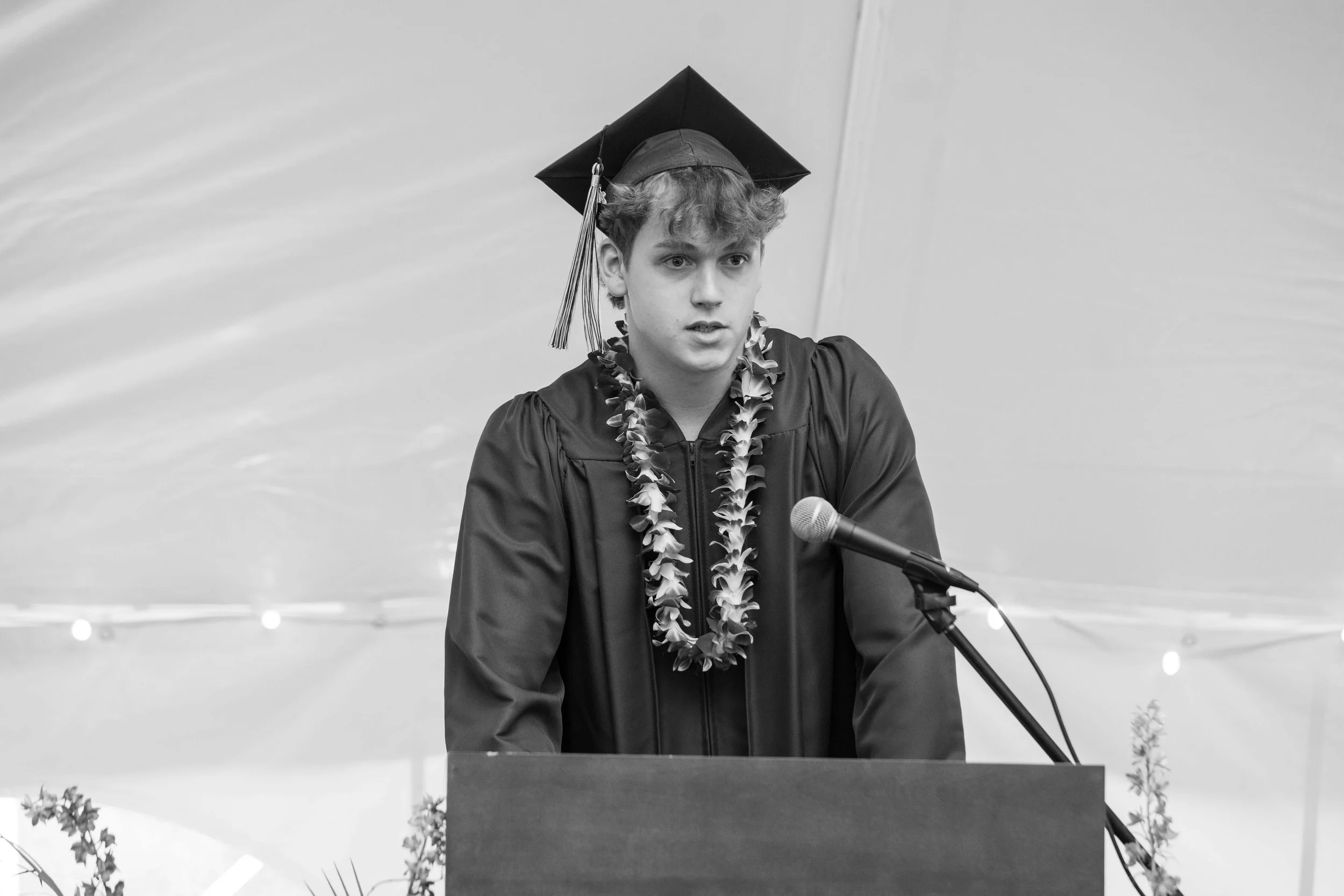
At Middlebridge School, preparing students for college is not a department or a programme, it is the point of everything we do. Every element of the Middlebridge experience, from our daily individual tutorial to our College Collaboration programme, is designed with one question in mind: will this student be ready?
Our students take credit-bearing courses at local universities before they graduate, not as an add-on, but as a core part of their preparation. They arrive at college having already demonstrated, to themselves and to the institutions they attend, that they can succeed at that level. That experience is worth more than any accommodation paperwork.
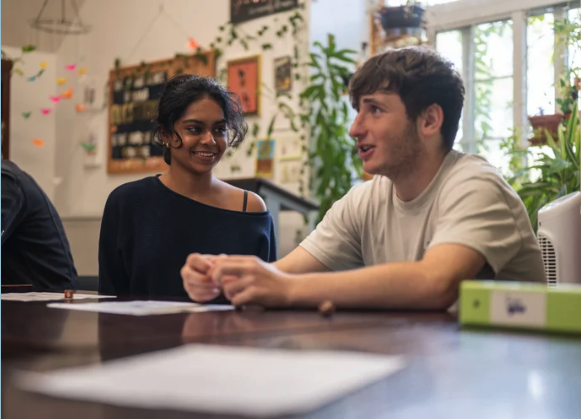
Our Emotional Intelligence curriculum teaches students to understand how they learn, how they feel, and how to ask for what they need. These are the skills that research consistently identifies as the true drivers of college success for students with learning differences.
Our Tutorial programme goes far beyond homework support. It is a daily, one-on-one session built around each student's specific learning profile — diagnostic, prescriptive, and focused not just on the assignment in front of them, but on the skills they are building for the years ahead.
By the time a Middlebridge student graduates, they know how they learn. They know what accommodations help them and why. They know how to walk into a disability services office on a college campus and have a productive conversation about what they need.
That is what college readiness actually looks like for students with learning differences. And it is what Middlebridge has been building, for over 18 years, one student at a time.
Summary
The data on college success rates for students with learning differences tells a story of real progress and honest challenges.
Students with learning disabilities are attending higher education in greater numbers than ever before. Graduation rates are improving. And the research is increasingly clear about what drives success: early identification, strong preparation, genuine self-advocacy skills, and the right support at every stage.
For families navigating this journey, the most important decisions are often made years before a student sets foot on a college campus. The school they attend, the support they receive, and the degree to which they are helped to understand and own their own learning profile.
Middlebridge exists for exactly this reason. To learn more about how we prepare students with learning differences for college and for life, visit our Admissions page or contact our team directly.
-
Not yet, but the gap is narrowing. Education statistics from the National Center for Education Statistics show that graduation rates for students with learning disabilities in higher education remain lower than for the general student population, but have improved significantly over the past two decades. The students who complete their degrees are overwhelmingly those who received strong preparation, understand their own learning profile, and actively engage with the support available to them on campus.
-
The most common accommodations at the college level include extended time on assessments, access to assistive technology, alternative testing environments, note-taking support, and flexibility around assignment formats. Unlike in high school, students must request these accommodations themselves, usually through a disability services office, and provide documentation of their specific learning disability. The earlier students learn to navigate this process, the better prepared they will be.
-
The most valuable thing parents can do is help their child develop genuine independence before they leave for college. This means encouraging them to self advocate in school, to understand their own learning differences, and to take ownership of their accommodations and support. Parents should also research universities carefully — not just for academic reputation, but for the depth of their learning centre, disability services, and available resources for students with learning differences. Starting this research early, and involving your child in it, makes a significant difference.
-
Research consistently points to self-advocacy as the single most important factor. Students who understand their own learning profile, know what support they need, and are confident enough to seek it out, from professors, from disability services, from learning centres, achieve significantly better outcomes than those who wait for support to come to them. This is a skill that must be built over time, ideally throughout secondary school, and it is at the heart of what schools like Middlebridge are designed to develop.
-
Middlebridge takes a holistic approach to college preparation that goes far beyond academic instruction. Students take credit-bearing courses at local universities before they graduate, participate in our daily individual tutorial programme, and complete our signature Emotional Intelligence curriculum. Our students arrive at college knowing how they learn, what they need, and how to ask for it. To find out more, visit our Admissions page.

Middlebridge School is a college-preparatory boarding and day school in Narragansett, Rhode Island, specialising in students with ADHD, dyslexia, and related learning differences.